Launch offer — valid today only

📄 Digital book in PDF · read it on your phone or print it

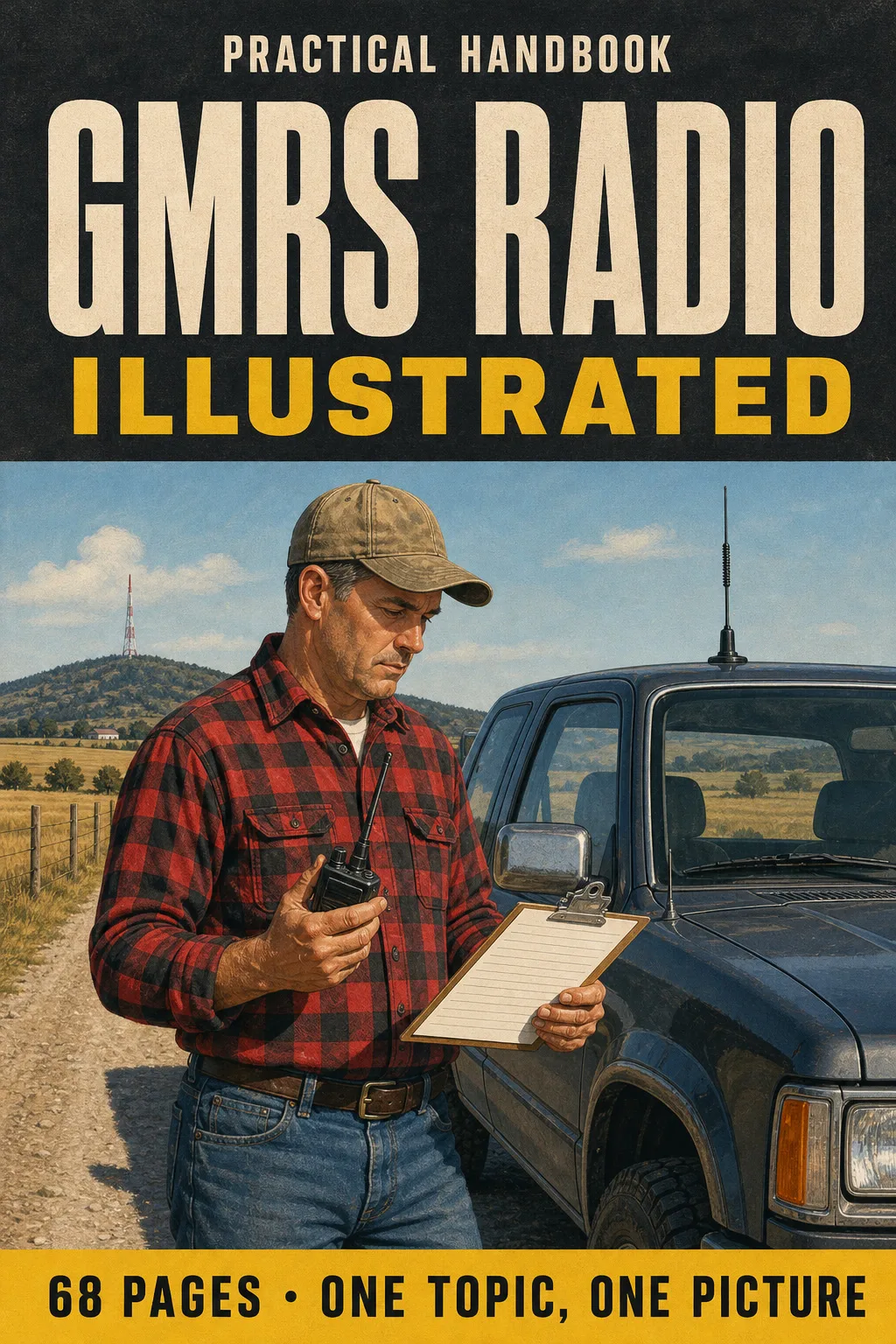
GMRS Radios, Antennas and Repeaters in Drawings Set Up, Program and Test Your Radios in the Same Order, One Topic per Page

The 22 channels, antennas and ground plane, coax loss, the PL-259 connector, fuse and power wiring, tones and offsets, repeater access and a family communication plan. Every topic gets its own page: the drawing first, then what you need to remember. 68 illustrated pages.

SHOW ME MY GMRS SETUP, DRAWN

🔒 Secure checkout · PDF by email · 30-day guarantee

Every topic, its own pageEach setup step drawn, with the explanation right beside it
68 illustrated pages9 parts, from the whole system on one map to the troubleshooting flowchart
Up-to-date sourcesFCC rules, Part 95 Subpart E (eCFR), and the FCC's GMRS licensing pages
PDF by emailFormat

Look Inside the Book

Every page has one big drawing and a box with the numbers and steps you need to know:

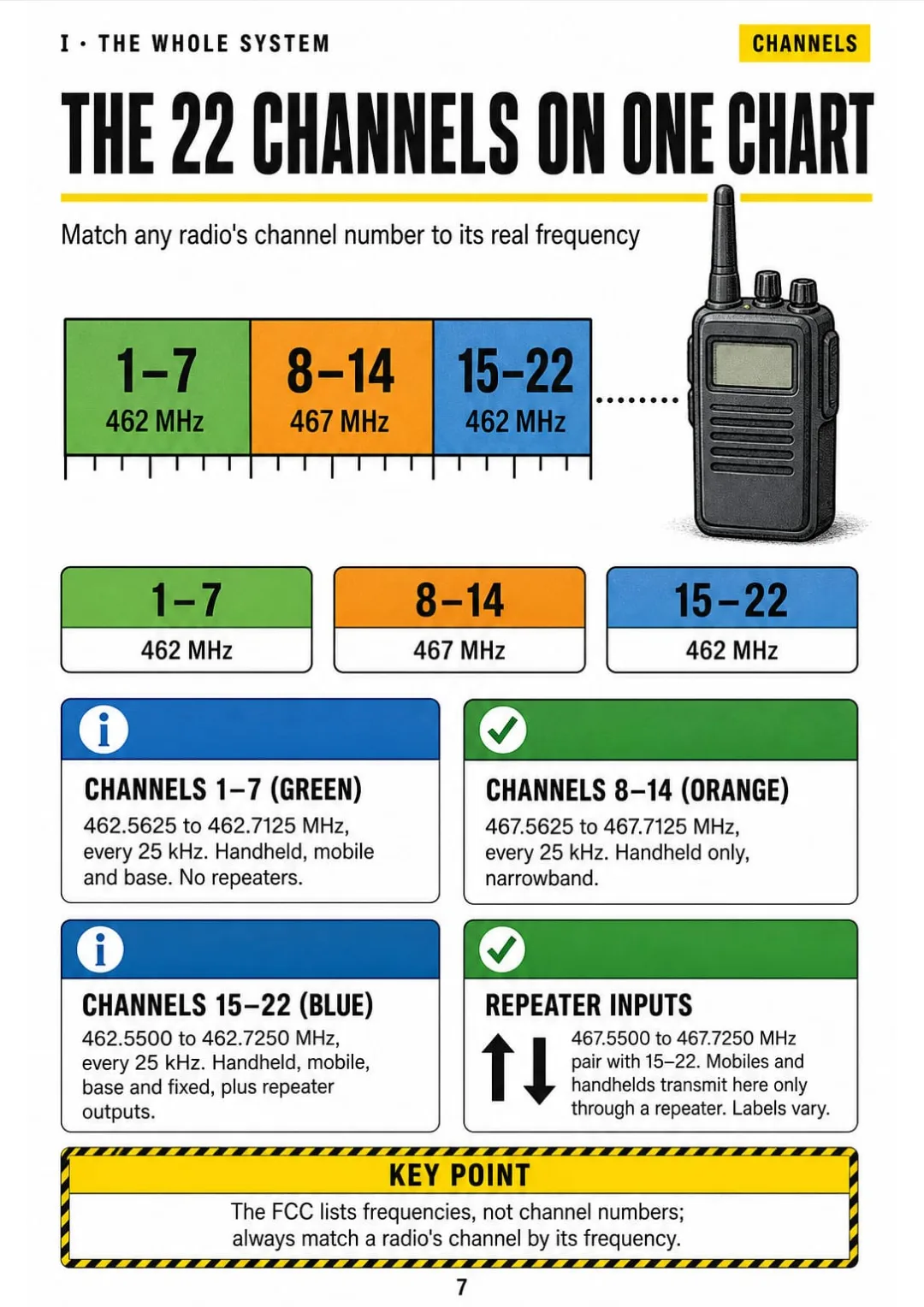
Channels 1–7 and 15–22 on 462 MHz, 8–14 on 467 MHz, handheld only.
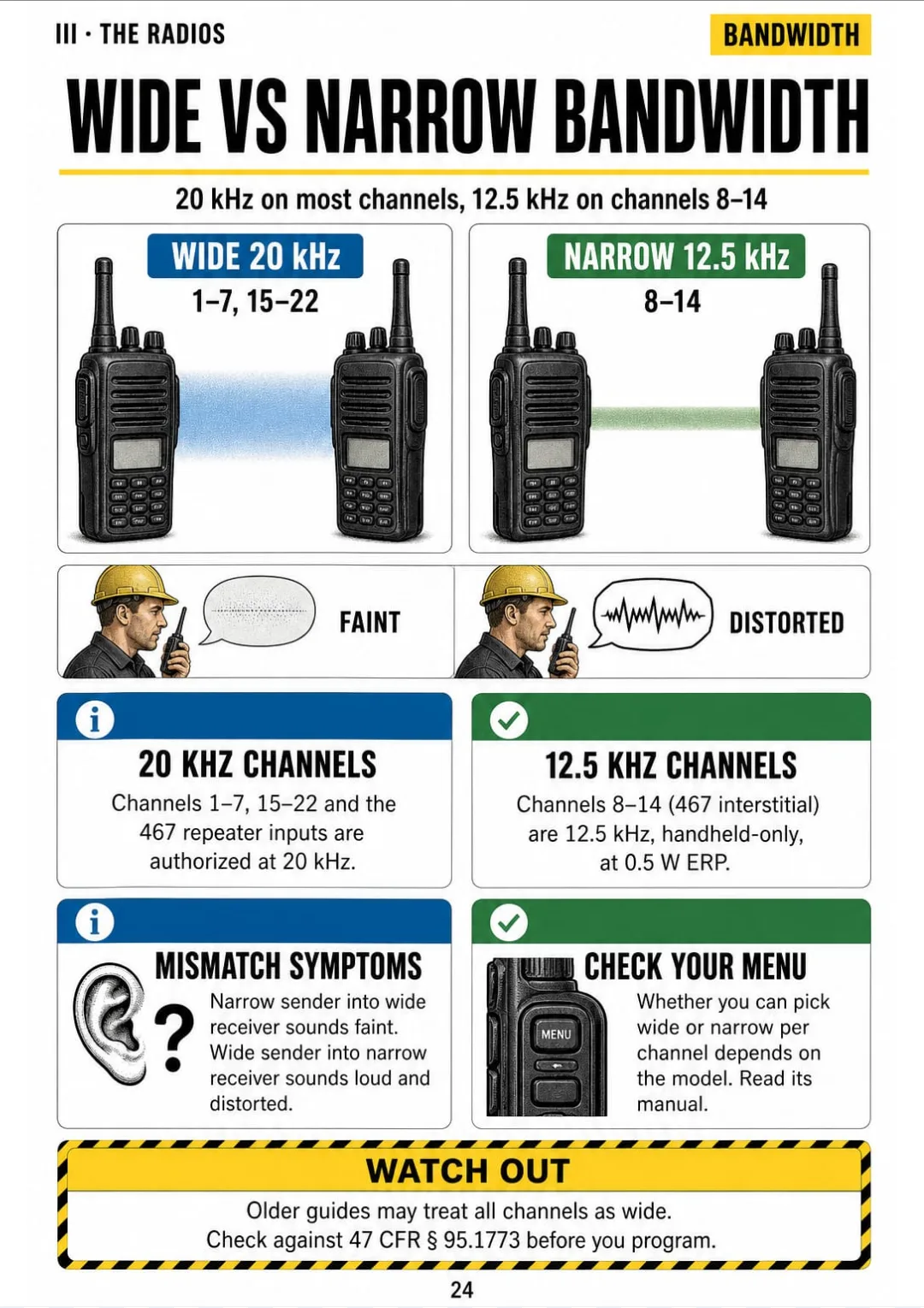
20 kHz on 1–7, 15–22 and repeater inputs; 12.5 kHz on channels 8–14
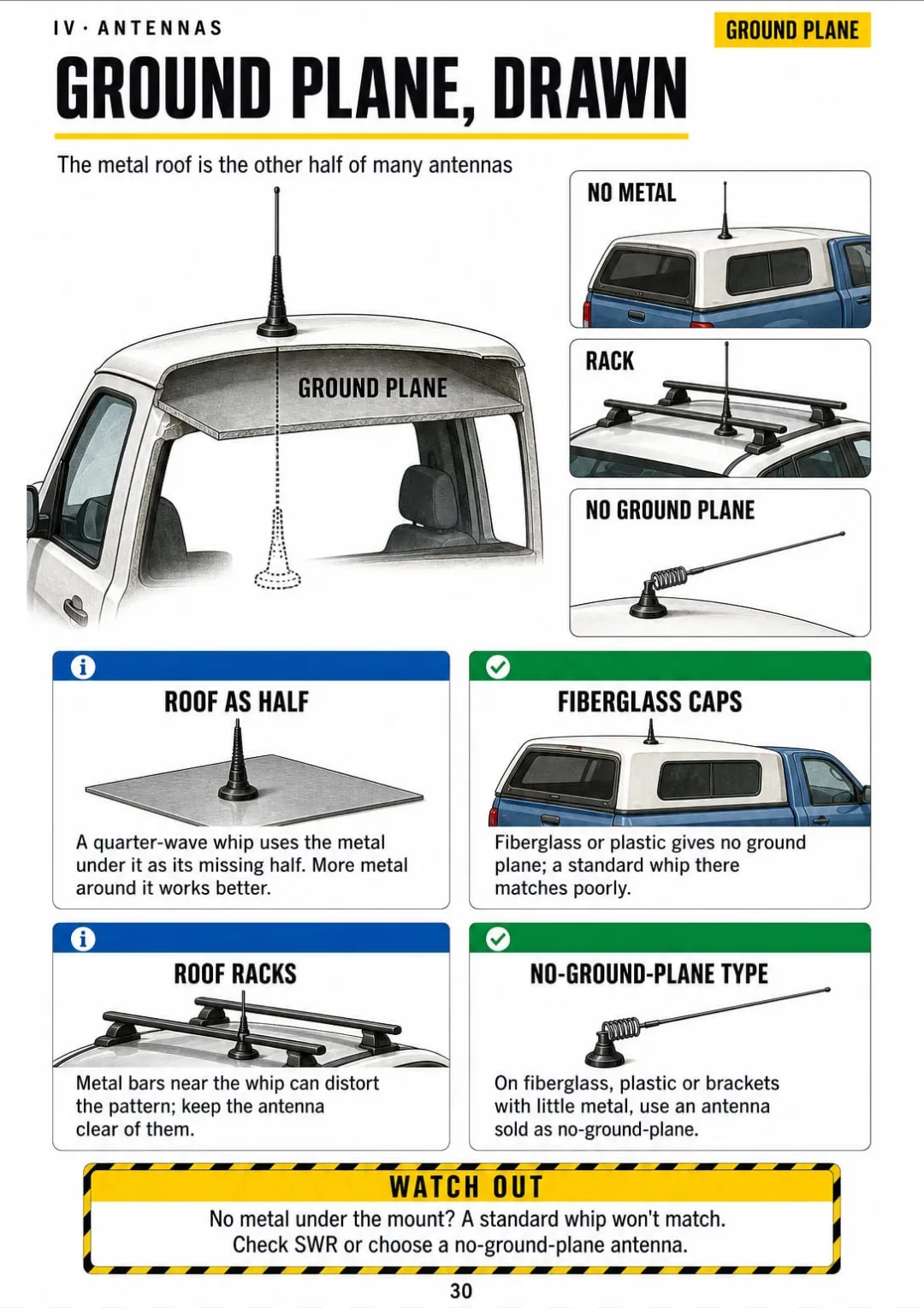
Metal roof, fiberglass cap and roof rack: how each changes the ground plane.
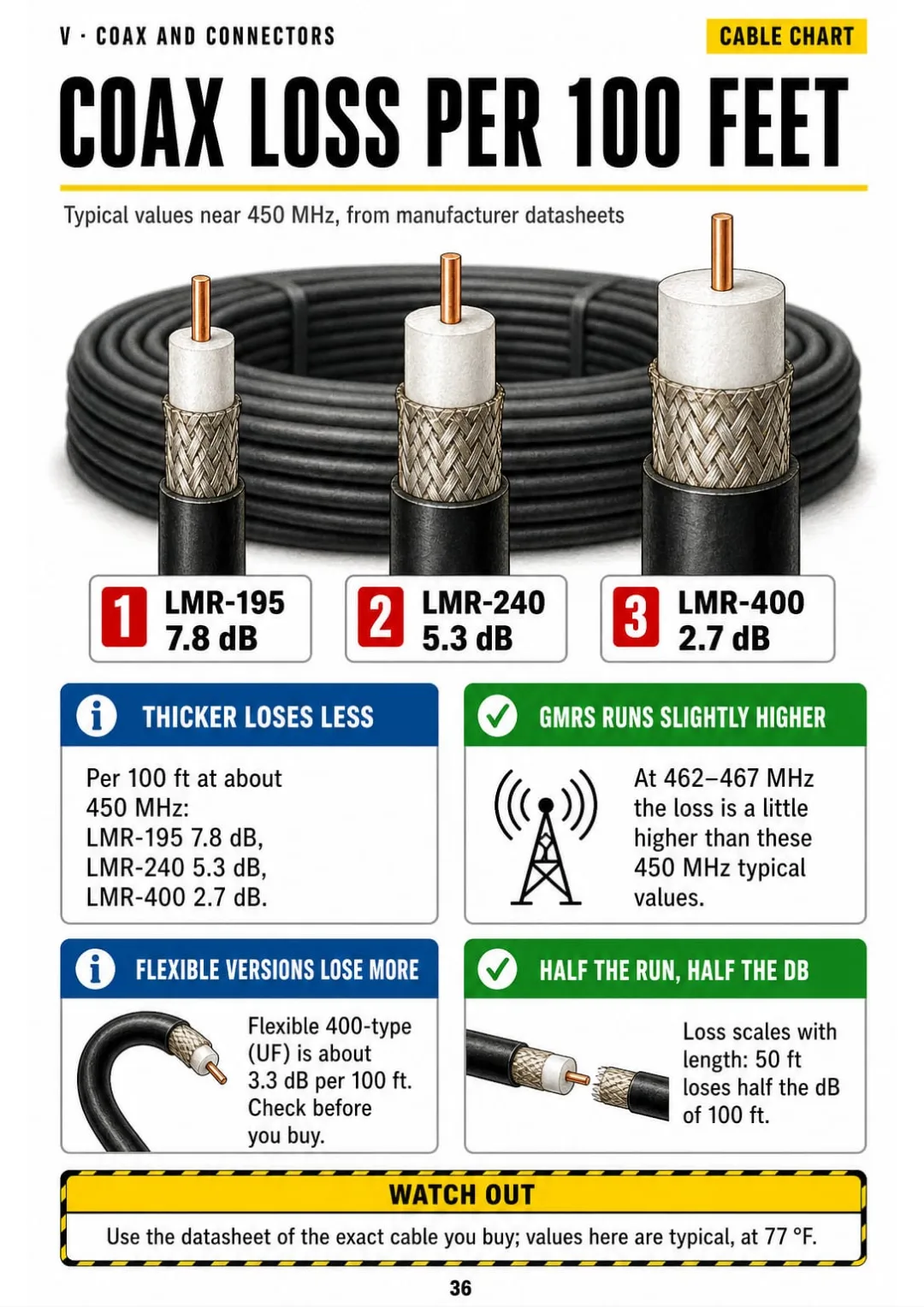
Per 100 ft at ~450 MHz: LMR-195 7.8 dB · LMR-240 5.3 dB · LMR-400 2.7 dB.
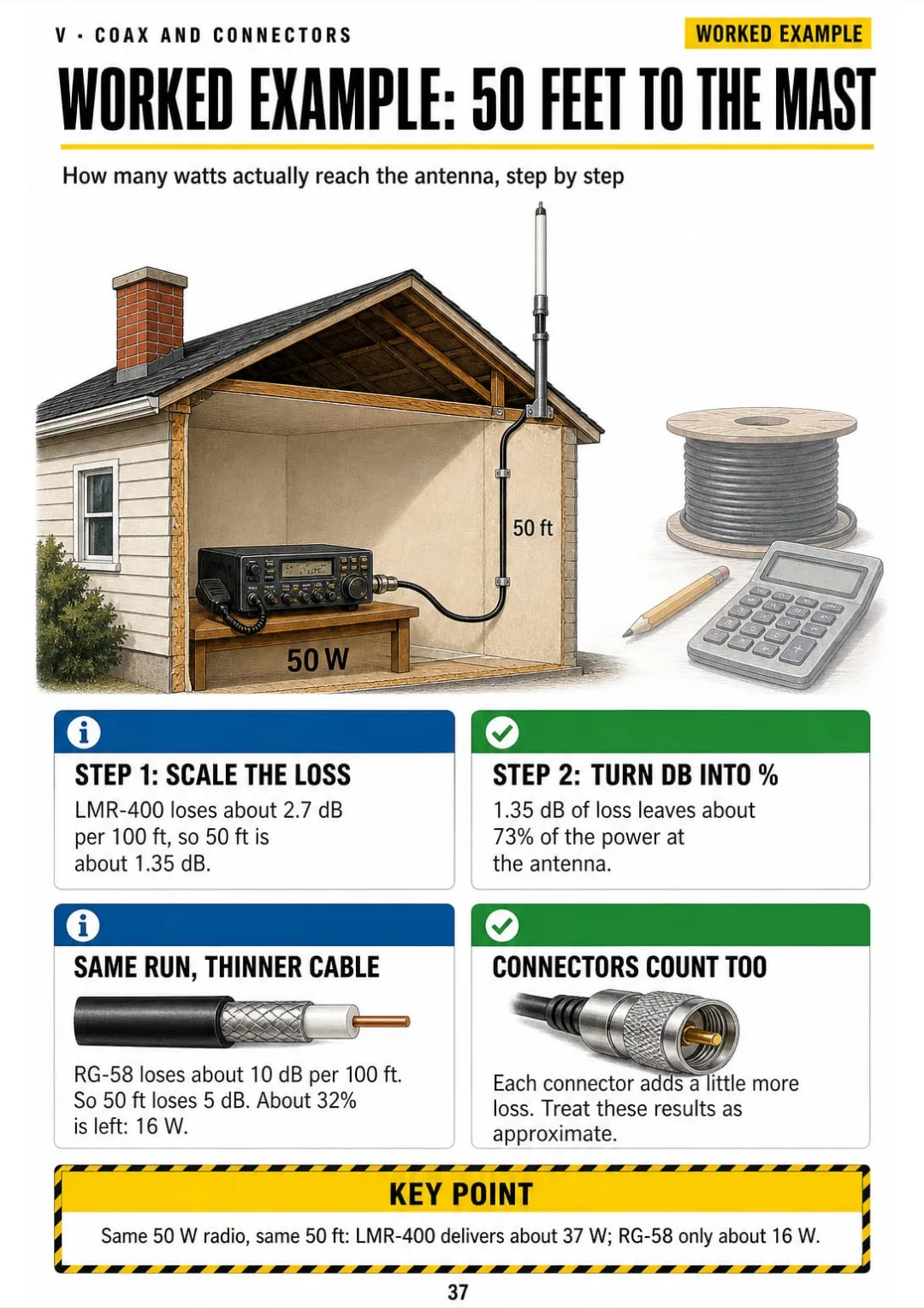
50 W through 50 ft: LMR-400 ≈ 37 W at the antenna, RG-58 ≈ 16 W.
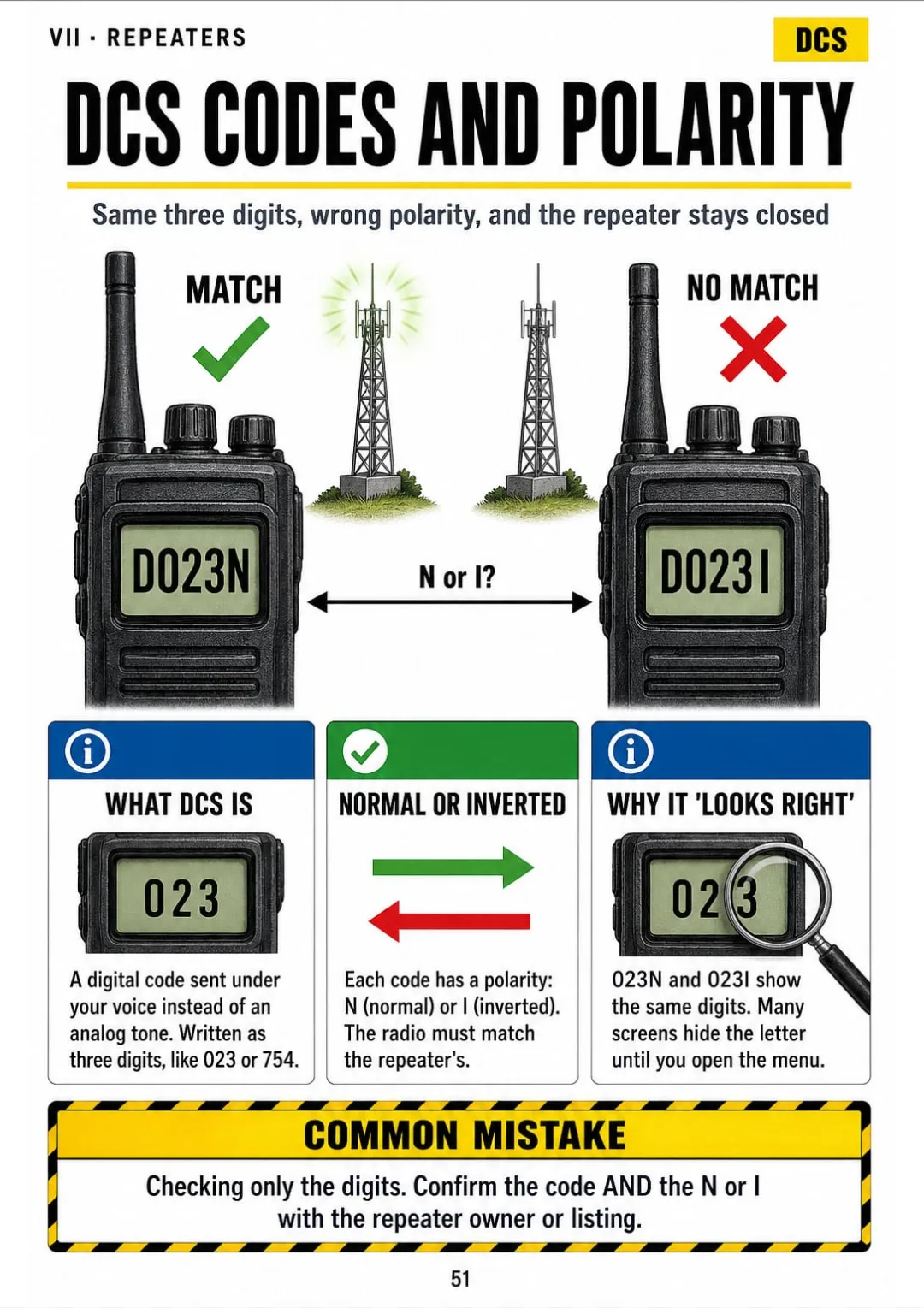
023N vs 023I: same digits, different code, and only one opens the repeater.
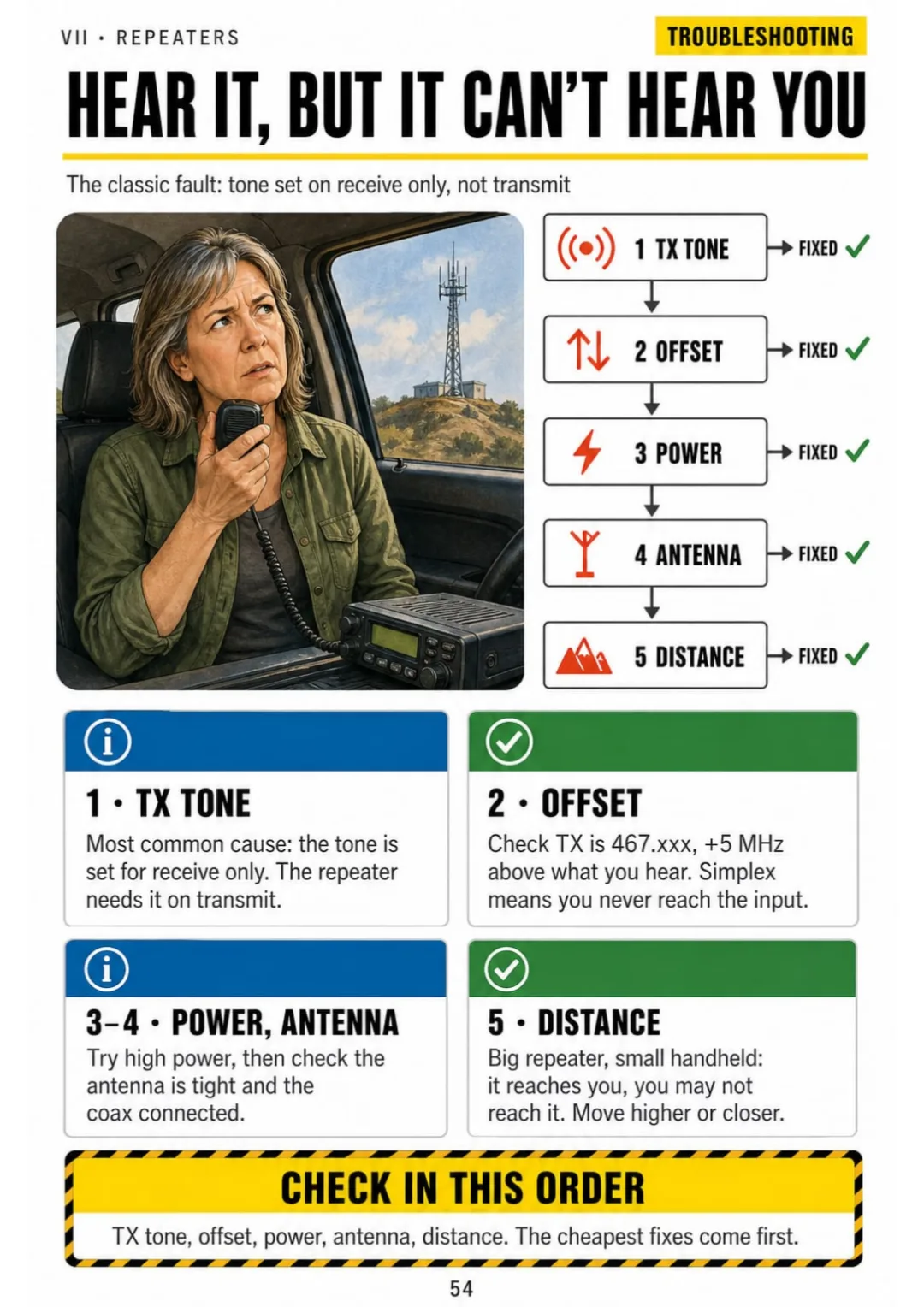
Five checks in order: TX tone, offset, power, antenna, distance.
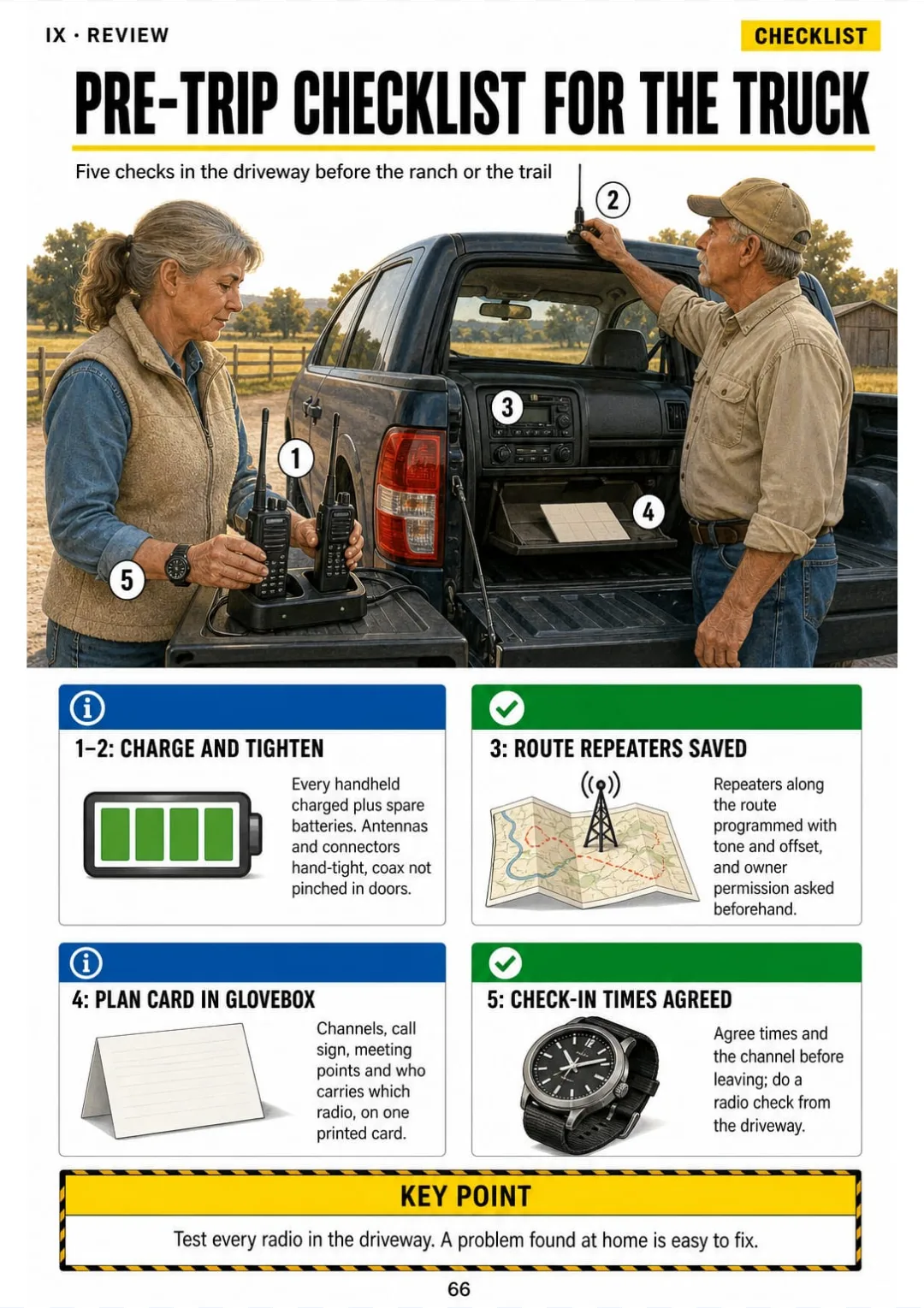
Radios charged, antennas tight, route repeaters saved, plan card in the glovebox, check-in times set

Swipe to see more →

These are real pages from the book. The table of contents is the full one: 9 parts and 64 topics.

The Problem Isn't You. It's How It Was Explained to You.

You're on the tailgate with a new mag-mount antenna, and your truck has a fiberglass cap. You stick the antenna on top, key up, and the SWR needle jumps.

The manual says the antenna "requires an adequate ground plane." Two paragraphs later you still can't tell if your cap counts. Nobody ever drew it for you.

Metal roof, fiberglass cap and roof rack: how each changes the ground plane.

In the book, ground plane is one page: the metal roof, the fiberglass cap and the roof rack drawn side by side, each one showing what it does to the antenna sitting on it.

The same goes for coax loss per 100 feet, installing a PL-259, the fuse near the battery, CTCSS tones and the repeater offset. Each one has its own page.

You see why the needle jumped, move the mount and test again, without opening the manual.

COMPARE FOR YOURSELF

The Same Topic, Two Ways to Learn It

THIS
  • The manual: line after line
  • Bandwidth explained only in words
  • You pick up the radio still guessing
Authorized bandwidth refers to the maximum occupied bandwidth permitted for an emission on a given channel. Limits differ between the main and interstitial channel groups: channels 1 through 7 and 15 through 22, together with the repeater input channels, permit an authorized bandwidth of 20 kHz, whereas channels 8 through 14 are restricted to 12.5 kHz. The operator should confirm that the transmitter bandwidth setting corresponds to the channel in use, since a mismatch may produce reduced audio levels or distortion at the receiving station.
FOR THIS
  • Wide and narrow bandwidth in one drawing
  • The kHz and the channels in a box
  • You see it and you get it
20 kHz on 1–7, 15–22 and repeater inputs; 12.5 kHz on channels 8–14
CONTENTS

Take a Look at the 9 Parts and 64 Topics

The whole system on one map, your license and the rules, the radios, antennas, coax and connectors, power wiring, repeaters and programming, testing and the family plan, and troubleshooting: 68 pages, all illustrated.

IThe Whole System on One Map · pp. 5-11
  1. GMRS in One Drawing
  2. GMRS, FRS, CB and Ham Side by Side
  3. The 22 Channels on One Chart
  4. Power Limits by Channel Group
  5. Simplex vs Repeater
  6. What Really Sets Your Range
  7. Watts vs Antenna: Where the Gain Is
IIYour License and the Rules · pp. 12-18
  1. Who Needs a GMRS License
  2. Applying in ULS, Step by Step
  3. Your Call Sign: When to Say It
  4. Who in the Family Is Covered
  5. What You Can and Can't Transmit
  6. Emergencies and Channel 20
  7. Your Rules Check Sheet
IIIThe Radios · pp. 19-25
  1. Handheld Anatomy
  2. Mobile Radio Anatomy
  3. The Base Station at Home
  4. FRS Bubble Pack vs GMRS Handheld
  5. Squelch and Monitor
  6. Wide vs Narrow Bandwidth
  7. Batteries and Charging
IVAntennas · pp. 26-34
  1. How an Antenna Works
  2. Gain and the Pancake Pattern
  3. Mobile Mounts Compared
  4. The Best Spot on Your Truck
  5. Ground Plane, Drawn
  6. Base Antenna and Mast Height
  7. Grounding the Mast and the Coax
  8. Upgrading a Handheld Antenna
  9. Reading an SWR Meter
VCoax and Connectors · pp. 35-41
  1. What Coax Loses
  2. Coax Loss per 100 Feet
  3. Worked Example: 50 Feet to the Mast
  4. Connector Types You'll Meet
  5. Installing a PL-259 in Order
  6. Weatherproofing an Outdoor Connector
  7. Bends, Kinks and Routing
VIPower Wiring · pp. 42-47
  1. Wire It Straight to the Battery
  2. The Fuse Goes Near the Battery
  3. Wire Gauge for Your Radio
  4. Negative Lead and Chassis Ground
  5. Engine Noise on Your Signal
  6. Base Power Supply and Backup
VIIRepeaters and Programming · pp. 48-56
  1. How a Repeater Works
  2. Reading a Repeater Listing
  3. CTCSS Tones, Explained
  4. DCS Codes
  5. Offset and Direction
  6. Programming in the Same Order
  7. Hear It but It Can't Hear You
  8. Your Programming Sheet
  9. Asking Permission and Repeater Etiquette
VIIITesting and the Family Plan · pp. 57-63
  1. Radio Check in Order
  2. A Real Range Test
  3. The Family Communication Plan
  4. Check-In Schedules
  5. Speaking Clearly on the Radio
  6. The Go-Bag Radio Kit
  7. When the Cell Network Is Down
IXReview and Troubleshooting · pp. 64-68
  1. Troubleshooting Flowchart
  2. Common Mistakes at a Glance
  3. Pre-Trip Checklist
  4. Quick Reference Card
  5. Glossary

One Page, One Topic, All Clear

Think of it this way:

You're parked at the gate of your land, eighteen miles from the repeater. You hear it loud and clear, but nobody ever answers you.

You open the book to Hear It, But It Can't Hear You and see five checks drawn in order: TX tone, offset, power, antenna, distance.

50 W through 50 ft: LMR-400 ≈ 37 W at the antenna, RG-58 ≈ 16 W.

Same with the PL-259, coax loss on a 50-foot run, the fuse near the battery, the ground plane on your truck and the family plan: each one on its own page.

GMRS Radio Illustrated is 9 parts and 64 topics, all drawn, and at the end a troubleshooting flowchart, a pre-trip checklist and a quick reference card for the truck.

What you see drawn, you don't have to memorize.

What's Inside GMRS Radio Illustrated:

Ipp. 5-11

The Whole System on One Map

GMRS in one drawing, how it compares to FRS, CB and ham, the 22 channels on one chart, power limits by channel group, simplex vs repeater and what really sets your range.

IIpp. 12-18

Your License and the Rules

Who needs a license, applying in ULS step by step, when to say your call sign, who in the family is covered, what you can transmit, emergencies and channel 20, plus a rules check sheet.

IIIpp. 19-25

The Radios

Handheld, mobile and base station anatomy, bubble pack vs GMRS handheld, squelch and monitor, wide vs narrow bandwidth, and batteries and charging.

IVpp. 26-34

Antennas

How an antenna works, gain and the pancake pattern, mobile mounts, the best spot on your truck, ground plane, mast height, grounding, handheld antenna upgrades and reading an SWR meter.

Vpp. 35-41

Coax and Connectors

What coax loses, loss per 100 feet, a worked 50-foot run to the mast, connector types, the PL-259 in order, weatherproofing and routing without kinks.

VIpp. 42-47

Power Wiring

Wiring straight to the battery, where the fuse goes, wire gauge, negative lead and chassis ground, engine noise, and base power supply and backup.

VIIpp. 48-56

Repeaters and Programming

How a repeater works, reading a listing, CTCSS tones, DCS codes, offset and direction, programming in the same order, the hear-it-but-it-can't-hear-you fix, your programming sheet and repeater etiquette.

VIIIpp. 57-63

Testing and the Family Plan

A radio check in order, a real range test, the family communication plan, check-in schedules, speaking clearly, the go-bag radio kit and what to do when the cell network is down.

IXpp. 64-68

Review and Troubleshooting

A troubleshooting flowchart, common mistakes at a glance, a pre-trip checklist, a quick reference card and a glossary.

At the end of the book: A troubleshooting flowchart, a pre-trip checklist, a quick reference card for the truck and a glossary.
Plus: 2 Free Books

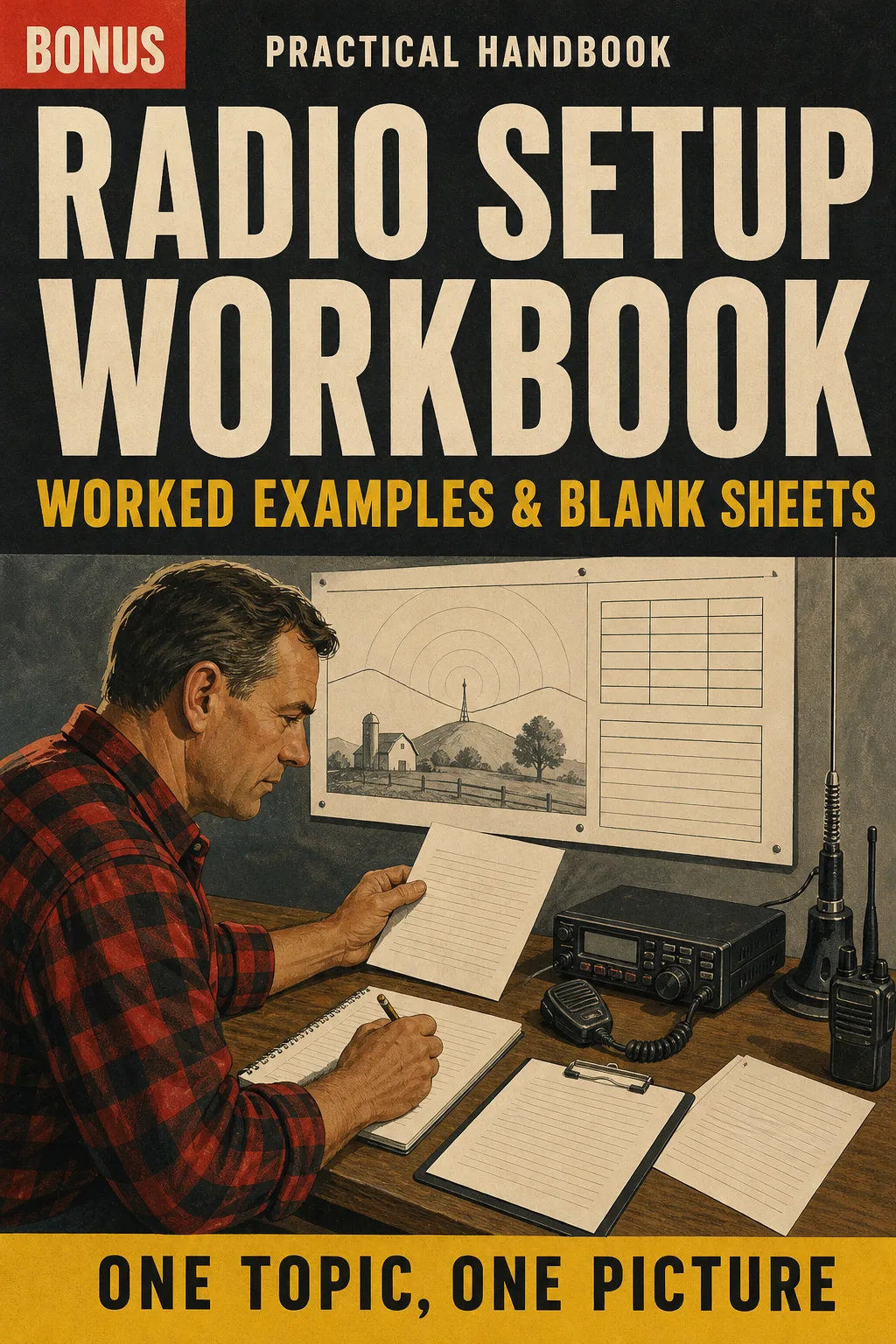
Radio Setup Workbook: Worked Examples & Blank Sheets

BONUS 1: «Radio Setup Workbook: Worked Examples & Blank Sheets»

Value on its own: US$ 17.90

Practice reading repeater listings, working out coax loss in feet and filling in your own programming sheet, so the steps stick before you touch the radio.

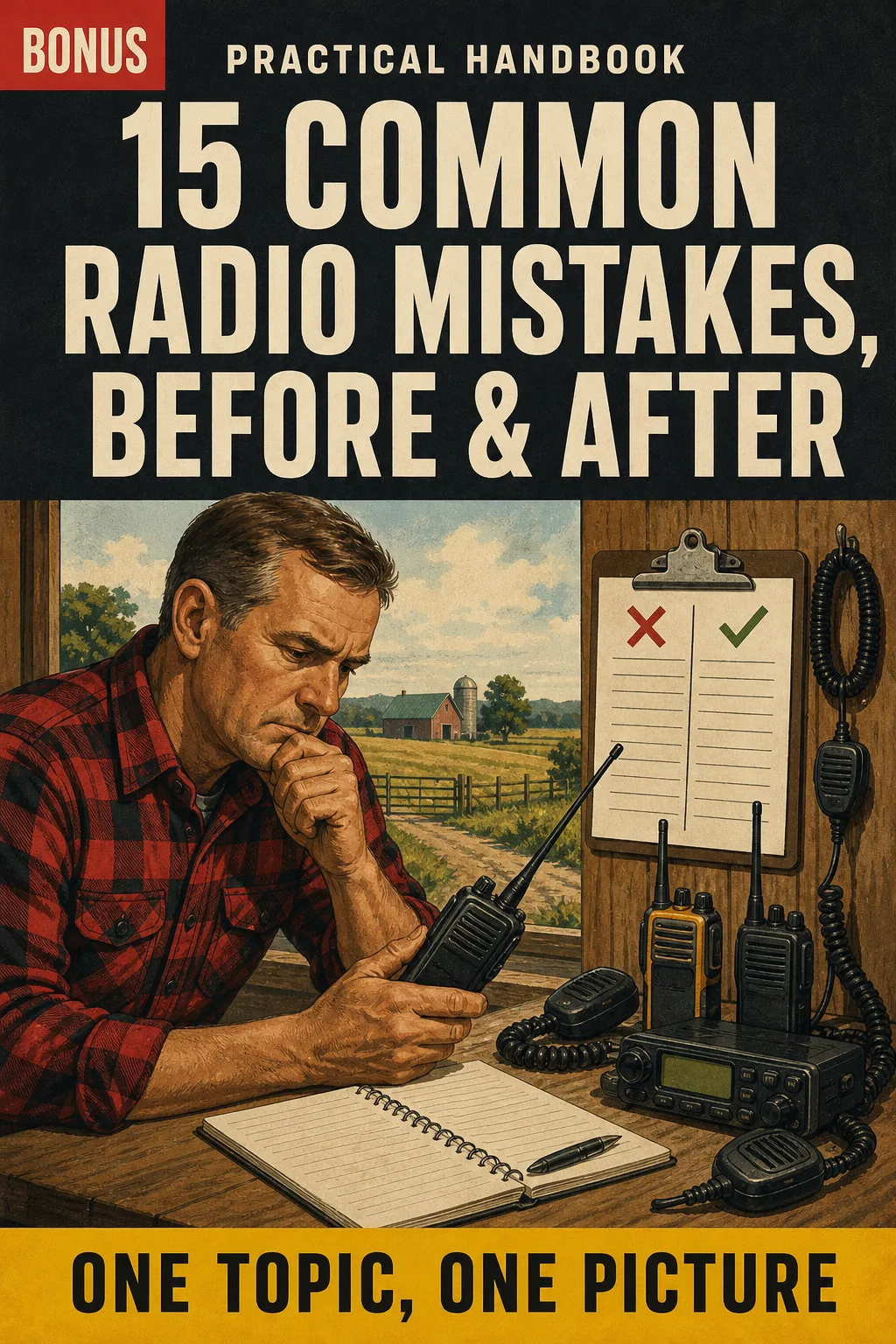
15 Common Radio Mistakes, Before & After

BONUS 2: «15 Common Radio Mistakes, Before & After»

Value on its own: US$ 14.90

See the wrong tone, the loose connector or the low antenna next to the fix, one drawing each, and catch the problem before it costs you a weekend.

GMRS Radio Illustrated with 2 Free Books

  • GMRS Radio Illustrated: 68 illustrated pagesUS$ 63
  • BONUS 1: Radio Setup Workbook: Worked Examples & Blank SheetsUS$ 17.90
  • BONUS 2: 15 Common Radio Mistakes, Before & AfterUS$ 14.90
  • High-resolution PDF to printIncluded
Total value US$ 95.80
YOUR PRICE:
US$ 27
You save US$ 68.80
YES, I WANT GMRS RADIO ILLUSTRATED FOR US$ 27

📄 This is a digital PDF book sent to your email: nothing is printed or shipped.

Secure purchaseEncrypted payment30-day guarantee

PDF by email: We email you GMRS Radio Illustrated as a PDF, together with the two free books. It's a single payment: no installments, no extra charges.

Who This Book Is For

You just bought your radios

You just bought your radios

You get the whole system on one map first, then each task drawn step by step, so the radios come out of the box and get set up right.

A trip or storm season is coming

A trip or storm season is coming

You program channel, tone and offset in the same order, run a real range test and leave with a family plan on one card.

You already run GMRS

You already run GMRS

You keep the coax loss table, the five repeater checks and the quick reference card at hand to fix problems on the spot.

Everything You Get Today

US$ 95.80US$ 27
YES, I WANT GMRS RADIO ILLUSTRATED FOR US$ 27

📄 This is a digital PDF book sent to your email: nothing is printed or shipped.

30DAYS
GUARANTEE

30-Day Guarantee

Try GMRS Radio Illustrated for 30 days, bonus books included.

We refund everything if the file won't open, if the book isn't what you see here, if you were charged twice or if the email doesn't arrive. Just email us.

You pay once. No subscriptions.

Frequently Asked Questions

Is it for me if I've never set up a radio before?

Yes. It starts from the whole system on one map and builds up one topic per page. No radio brand is used: it shows what to set and in what order (channel, tone, offset, power), which is the same on any GMRS handheld, mobile or base. To find where each setting sits in your menu, keep your radio's manual at hand.

Where does the content come from?

From the FCC rules for GMRS (Part 95, Subpart E, current text on eCFR) and the FCC's GMRS licensing pages. Channels and power follow the rules as revised in 2017: 22 channels, up to 50 watts on 15–22, 5 watts on 1–7 and half a watt on 8–14, handheld only. Each rule page names the Part 95 section it comes from, so you can check it against the current text.

Is this official material?

No. It's an independent illustrated guide. It isn't official and isn't approved by the FCC or any radio maker.

Does it replace a course or a professional installer?

No. It helps you understand and organize your setup. Always follow the current FCC rules and your radio's instructions, and call a pro when the job needs one.

Do I need a license to use GMRS?

Yes. GMRS needs an FCC license: there's no exam, you apply online and it covers your immediate family. Part 2 walks you through it step by step, and the FCC's GMRS page has the current fee and terms.

When and how does it arrive?

As a PDF by email, sent to the address you enter at checkout. The 2 bonus books come the same way.

Do I have to pay every month?

No. It's a one-time payment.

Can I have it on paper?

Yes. The PDF is ready to print, so you can keep the pages you need in the truck or by the base station.

How does the refund work?

You have 30 days. We refund everything if the file won't open, if the book isn't what you see on this page, if you were charged twice or if the email doesn't arrive: just email us.

Before You Close This Page

No more rereading the manual with nothing sticking.

Tones, offsets and coax loss: you see them drawn, and that's it.

You head out on the trail knowing where everything is.

Drawings make studying faster.

The book is right below.

One-time payment: US$ 27 · Guarantee: 30 days · PDF by email

YES, I WANT GMRS RADIO ILLUSTRATED FOR US$ 27

📄 This is a digital PDF book sent to your email: nothing is printed or shipped.